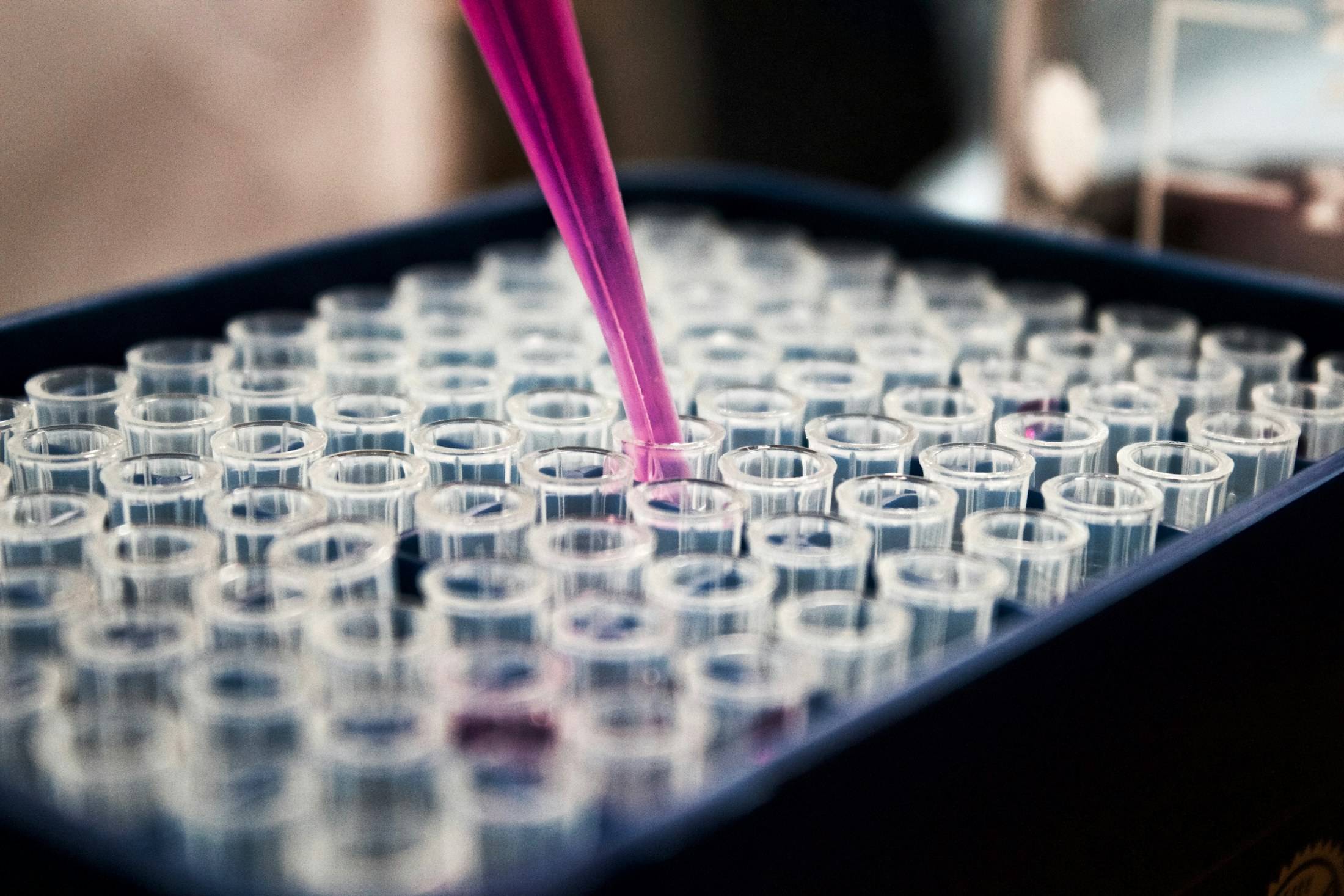
Industries · Chemical Products
SR&ED Tax Credits for Chemical Products Companies
Chemical formulation and processing is experimental by nature. RDC helps chemical product companies document their formulation and process development and claim the costs behind it.
Eligible work
What chemical products R&D can qualify for SR&ED?
Work qualifies when it meets the program’s three criteria: a scientific or technological uncertainty at the start, a systematic investigation to resolve it, and an advancement in knowledge, whether the project succeeds or not. Read the three criteria.
- Developing new formulations, coatings, adhesives, cleaners or additives with specific performance targets
- Reformulating products to replace restricted or costly ingredients without losing performance
- Developing or scaling up chemical processes where reaction behaviour or yield was uncertain
- Stability, compatibility and performance testing of experimental batches
Eligible costs
The costs you can recover.
01
Labour
Wages of chemists, lab technicians and process staff for the time spent directly on the experimental work.
02
Contractor expenses
Payments to Canadian contract labs, toll processors or consultants doing SR&ED work for you.
03
Materials used in testing
Chemicals, raw materials and test batches consumed or transformed in experiments.
04
Overhead
Overhead related to the SR&ED work, or a proxy amount calculated on eligible salaries.
Combined federal and provincial credits can return up to 50% of eligible R&D costs. See all eligible expenditures.
How the claim works
RDC prepares it. Your accountant files it.
- 01
Free initial evaluation
We review your projects and costs and tell you whether they qualify, with an SR&ED refund estimate.
- 02
Technical report and costing
Our engineers and accountants write the technical project descriptions and calculate the eligible labour, contractor, materials and overhead costs.
- 03
Sent to your accountant
We send the completed claim to your accountant to file with your corporate tax return, within 18 months of your fiscal year end.
- 04
Follow-up and CRA review support
We track the claim and support you through any CRA review.

FAQ
SR&ED questions from chemical products companies.
Does quality-control testing qualify for SR&ED?
Routine quality control and standard testing do not qualify on their own. Testing that is part of a systematic investigation, for example testing experimental formulations against a hypothesis, can be included.
What should we document?
Lab notebooks, batch records, formulation versions and test results. They show what was uncertain, what you tried and what you learned, which is what the claim and any CRA review rely on.
How much can we get back?
Combined federal and provincial SR&ED credits can return up to 50% of eligible R&D costs. Most Canadian-controlled private corporations (CCPCs) earn a 35% federal refundable credit on up to $6 million of qualified expenditures a year, plus a provincial or territorial R&D tax credit where they did the work. Every province except Prince Edward Island offers one, including Ontario, Quebec, British Columbia and Alberta, and so does Yukon. Your actual refund depends on your company, your province and your costs, so RDC gives you an estimate in a free initial evaluation.
When do we have to file?
The SR&ED claim is filed with your corporate tax return, and it must be filed no later than 18 months after the end of the tax year in which the work was done. RDC prepares the claim and sends it to your accountant to include with the return.
What’s the hold up? Let’s Claim Success!
Contact us anytime to discuss your company’s SR&ED projects and refund eligibility. We would be pleased to provide you with a FREE initial SR&ED Consultation of these project(s) and give you an SR&ED refund estimate based on your expenditures.